Green Beer, Revisited: A Sustainable Brewery Tour of Sonoma County
- Written by Taylor Harris
- March 17, 2026
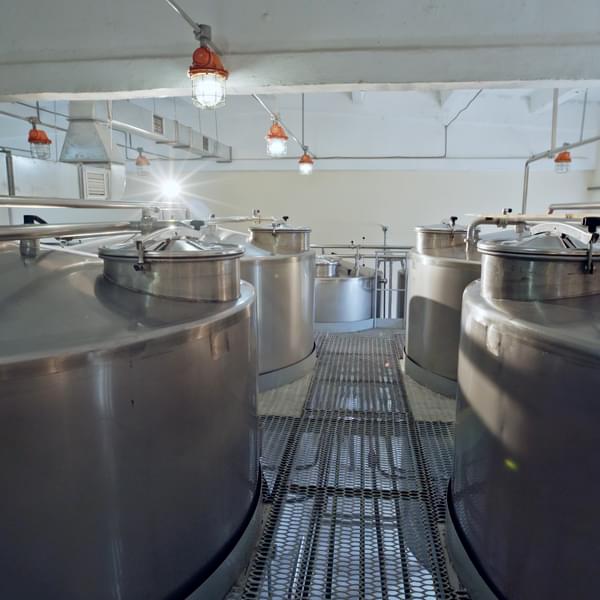
Two years ago, we wrote about green beer (not the dyed kind poured on St. Patrick’s Day, but beer brewed with sustainability in mind). This year, we’re revisiting the idea with a fresh perspective: what does “green beer” actually look like in practice?
In Northern California, the answer is more tangible than you might expect. Across Sonoma County, breweries are rethinking how beer is made—from the energy that powers their operations to the water and waste systems behind every pint. And while only a handful currently offer public-facing tours of these efforts, those that do provide a unique opportunity to see sustainability in action, making for an impactful day trip.
Before mapping the route, it’s worth understanding what makes a brewery sustainable in the first place.
What Makes a Brewery Sustainable?
Brewing is both an art and a resource-intensive process. It takes significant amounts of water, energy, and agricultural inputs to produce beer, making it an ideal industry for efficiency innovation.
Sustainable brewing isn’t about a single initiative. It’s about systems working together to reduce impact at every stage.
- Energy optimization and recovery: Breweries rely heavily on heat for brewing and cooling for fermentation. Advanced systems capture and reuse heat from the brewing process, while high-efficiency boilers, refrigeration, and smart controls reduce overall energy demand. These behind-the-scenes upgrades can dramatically cut both emissions and operating costs.
- Water stewardship: It can take between three to seven barrels of water to produce a single barrel of beer. Leading breweries are working to reduce that ratio through water monitoring, reuse systems, and high-efficiency equipment, which is critical in drought-prone regions like California.
- Waste-to-value systems: Brewing byproducts don’t have to go to waste. Spent grain can be repurposed as animal feed or compost, while organic waste streams can be converted into energy.
- Renewable energy integration: Breweries are increasingly tapping into renewable energy to power operations. Some also invest in renewable energy credits to further reduce their footprint.
These practices show that sustainability in brewing is an engineering challenge being solved in real time.
A Sonoma County Sustainable Brewery Route
One of the best parts about exploring sustainable brewing in Sonoma County is how accessible it is. Within a short drive, you can see how different breweries bring these practices to life.
Stop One: Lagunitas Brewing Company (Petaluma)
Known for its iconic IPAs, Lagunitas is also a standout when it comes to operational sustainability. At its Petaluma brewery, wastewater is transformed into a resource. The facility uses an advanced treatment system that captures methane gas produced during the breakdown of brewing waste and converts it into usable energy. This closed-loop approach reduces emissions while offsetting energy demand.
Tourgoers can also see:
- Large-scale fermentation systems in action
- On-site infrastructure that turns waste into energy
- Solar installations contributing significantly to the brewery’s energy consumption
Stop Two: Russian River Brewing Company (Windsor)
Built with sustainability in mind from the ground up, Russian River’s Windsor facility reflects a fully integrated approach to efficient brewing. The brewery incorporates sustainability across its entire operation:
- Solar power supporting on-site energy needs
- Water-efficient systems designed to minimize waste
- High-efficiency brewing equipment, lighting, and HVAC
- Spent grain repurposed for agriculture and composting
- A preference for locally-sourced ingredients to reduce transportation impacts
What I Learned on the Sustainable Brewery Tour
The biggest surprise wasn’t just how beer is made, it was how much engineering goes into making it responsibly. Before visiting these breweries, sustainability might seem like small actions: recycling cans, reducing packaging, or sourcing locally. But in practice, it looks much bigger:
- Wastewater treatment systems that function like small-scale utilities
- Solar arrays spanning entire rooftops
- Technologies that recover energy from what would otherwise be waste
It's a reminder that every pint of beer is backed by a complex system of water, energy, agriculture, and logistics. And when breweries invest in optimizing systems, the impact scales quickly because beer is one of the most widely consumed beverages in the world.
Celebrate St. Patrick’s Day with Greener Beer
Here is my St. Patrick's Day PSA: While St. Patrick’s Day may be known for drinking bright green beer, breweries across Northern California are proving that the better approach is brewing greener beer instead. Whether you’re planning a Sonoma County brewery visit or simply picking up your favorite six-pack, it’s worth recognizing these systems behind every pint and supporting the businesses working to make each one a little more efficient.
Cheers to green beer!
Related Energy Resources
Explore Resource Innovations' clean energy transition insights.