Plugged In: My Experience at Forth Roadmap
- Written by Chris Crockett
- October 9, 2026
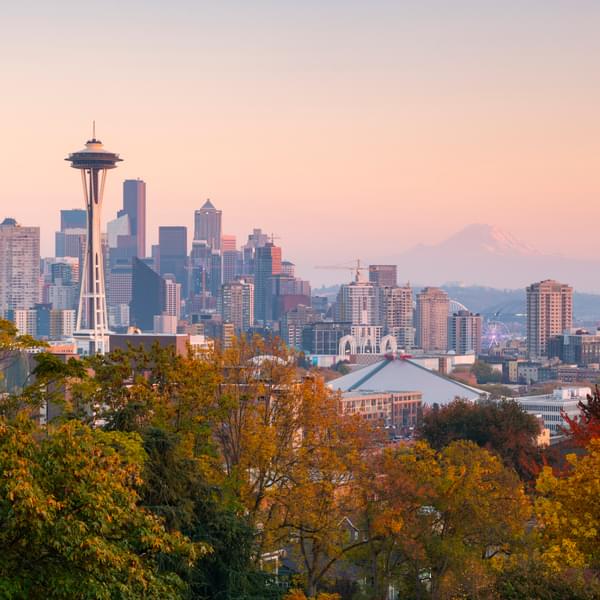
Happy fall, Reader, and welcome back to my corner of the internet.
I just got back from Seattle, where Forth held its Annual Roadmap Conference. If you’ve never been, this conference brings together people from the electric transportation industry—from utilities and automakers to charging companies and policymakers. It’s a great place to hear what’s happening across the industry and where things are headed.
I’ll be honest about my headspace going in. I really wanted to know how the transportation electrification (TE) industry is actually doing.
The last couple of TE conferences I’ve tracked either got canceled, shifted their focus to make room for data centers, or carried a general feeling of uncertainty. Forth didn’t pretend otherwise. The opening session acknowledged that clean transportation is facing unprecedented challenges and uncertainty, especially in the U.S., while also pointing to real opportunities ahead. I appreciated the honesty of these conversations.
Overall, though, I left Seattle more energized than I arrived. The industry is still here, still building, and the conversations have moved from lofty ideals to practical solutions. Here’s what stuck with me.
The Pacific Northwest Vibe Check
The Northwest is an interesting place to take the industry’s temperature. And it was a surprisingly cool 50 degrees Fahrenheit. Okay, I’m kidding, but I did need to work in that I went from 90-degree weather on one coast to fully immersed in fall in Seattle.
But back on topic: Washington is second only to California for electric vehicle (EV) adoption, with roughly 250,000 EVs on its roads as of last fall. Growth has flattened, though. EVs peaked at 27% of new car and truck sales in Washington in September 2024 before sliding back, and the state is still a long way from its 35% zero-emission vehicle (ZEV) sales requirement for 2026. So, while the region is still a leader, it’s also feeling the same headwinds as everyone else.
From Big-Picture Challenges to Real-World Strategies
A lot of the hallway talk centered on two practical questions for utilities: What equipment are they allowing? What happens when the market shifts?
In other words, these pilots and programs that pay customers for bidirectional charging need a list of approved equipment, and that list comes with requirements. MassCEC’s vehicle-to-everything (V2X) program, for example, required chargers to carry UL 1741-SB certification (or be on track for it), to discharge while grid-parallel, to be commercially available, and to work with vehicles people can actually buy.
That’s not easy in a market that keeps changing. Ford, for example, ended production of the all-electric F-150 Lightning in December 2025. Ford is moving the nameplate to an extended-range model with a gas engine acting as a generator, part of a broader pivot hybrids and smaller, lower-cost EVs.
When an Original Equipment Manufacturer (OEM) pulls back like that, programs built around its vehicles have to revisit their qualified products. New technology keeps showing up while familiar options disappear, and utilities are trying to design programs flexible enough to handle both.
Client Perspective: MassCEC at the EV Crossroads
The panel I was most excited for was called “Utilities at the EV Crossroads: Balancing Near-Term Costs with Long-Term Opportunity,” and it brought together Elijah Sinclair, Senior Program Manager at the Massachusetts Clean Energy Center, with Xantha Bruso from PG&E, Kate Sargent from TYLin, and Rendall Farley from Avista, moderated by Ethan Landy of Hawaiian Electric.
The panel talked about EVs shifting from a new source of demand to a long-term grid asset, which has basically been the thesis of this column for the last few months, so I was in my element.
Resource Innovations is a partner on MassCEC’s V2X Demonstration Program. So, I’m biased, but I’m also close enough to know how much work it takes to make these programs work. For instance, the program team installs bidirectional chargers at no cost for school districts, municipalities, and residents across Massachusetts. During a demand response event, the program is expected to send more than a megawatt back to the grid, roughly enough electricity to cover about 300 homes for an hour.
Elijah was the only person on the panel whose program is starting V2G dispatch. What I appreciated most was his candor about the pain points. Two stood out: construction timelines and getting all the technology to reliably communicate with each other (vehicle, charger, software, and the utility). I think anyone who has deployed vehicle-to-grid (V2G) is nodding as they’re reading this. The good news is that MassCEC is turning those lessons into a V2X Guidebook planned for early next year, which should save the next wave of programs a lot of headaches.
A few other insights from the panel worth bringing home:
- A lot of folks in the room wanted to know what PG&E is doing, which tells you how many utilities are watching California for cues.
- The biggest benefits (from Xantha’s perspective) are landing with customers: lower electric bills expected as more people electrify and enroll in managed charging, plus lower fuel costs overall. That point hits harder right now, with the national average for gas at $4.48 last week, the highest it’s ever been for this time of year. (For comparison, Washington’s Department of Ecology puts home charging at about a dollar a gallon equivalent.) Fleet customers are seeing real operational savings too because of this.
- Rendall at Avista is starting to think about EVs as a resilience tool, using islanded vehicle-to-home (V2H) technology during extreme weather events so a customer’s car can keep the house running when the grid can’t. You probably know I think that’s one of the most compelling parts of the whole story.
Three Things I’m Taking Away From Forth Roadmap
First, people in the Pacific Northwest are still working on TE and genuinely excited about it, and that gave me a real jolt of energy. It felt really good to be in rooms full of people building things.
Second, I expect to see a lot more programs for public charging and multifamily housing. Those remain some of the biggest gaps, and the agenda reflected it, with a full session on charging at complex sites like apartment buildings, workplaces, and dense urban areas. If you rent, charging has probably been one of the hardest parts of the EV question for you, and a lot of the next wave of program design is headed your way.
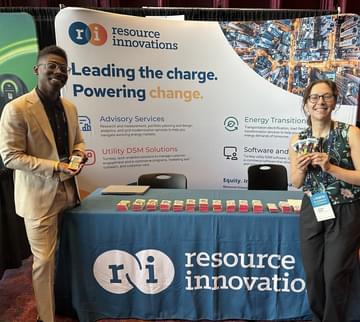
Third, and this is the most important takeaway: Resource Innovations is becoming known as the chocolate booth. People remembered the bonbons from last year. This year we changed it up and brought chocolate bars instead of bonbons from a local, woman-owned business in Seattle. We’ll keep the tradition going next year in Long Beach (plan your visit accordingly).
Looking Ahead
The EV conversation has really grown up. Utilities are deep into the ‘how’ of making EVs work for the grid. Managed charging is moving from pilot to program. V2G is dispatching. Resilience is becoming part of the value case. And all of this gets better when the people doing the work share what they’re learning. That’s why things like the MassCEC guidebook, the PG&E lessons everyone wants, and Avista’s thoughts on resiliency matter well beyond their own service territories.
If any of this touches the work you’re doing, I’d love to hear from you. You can read more about MassCEC’s V2X Demonstration Program on their site, keep an eye out for the guidebook later this year, and reach out to me or the Resource Innovations team if you want to compare notes.
Related Resources
Explore Resource Innovations' clean energy transition insights.