Chris’ Corner: Save Money with EVs as Your New Year’s Resolution
- Written by Chris Crockett
- January 27, 2026

It’s 2026, everyone—Happy New Year! I know a lot of people are setting resolutions and goals for the year. Mine is to start and continue this blog series! Hope to see you in my corner each month as we delve into electric vehicles, virtual power plants, and the future of our energy systems.
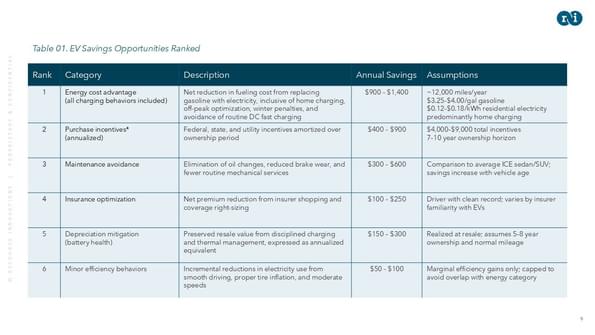
Speaking of new year’s resolutions, I’m guessing many of us are setting goals related to money—Fidelity found that 64% of Americans were considering a financial resolution in their most recent study. So, for those of you who have an EV, let’s help you reach those goals. How does saving $3,500 a year sound?
Let’s Get the Math and Assumptions Out to Start
I always hate when articles save the good stuff for the end, so I promise to frontload my blog posts with the headline upfront. I’ll say it plainly: if you have an electric vehicle, the biggest savings will come if you’re someone who drives more. Probably not the most intuitive, and I’m not telling you to find more excuses to drive. Just keep in mind that my assumptions are based on someone who drives 12,000 miles a year. Sounds like a lot, but that’s a conservative estimate. The Federal Highway Administration estimates that the average American driver is banking closer to 13,500 miles per year. If you drive less than this, your mileage may vary (ha).
A Note on Winter Optimization
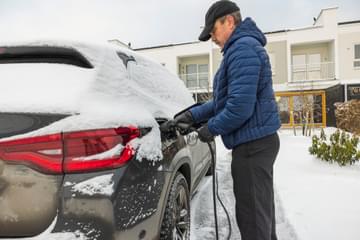
I rolled a lot of the savings opportunities into the first category, but if you live in a cold area, this is the time to optimize. Heating your vehicle is the biggest strain on your battery for the next few months. Take advantage of covered or garage parking where available and preheat the vehicle while you’re plugged in. (There’s no risk of turning on your vehicle in a garage. No tailpipe emissions!) I often get questions about preheating and battery health. Keep in mind that, when the option is available, most EVs will take power directly from the outlet instead of the battery for heating. So, you don’t need to worry about degrading your battery with plugged-in preconditioning.
Also, you might overestimate how much heating you need! Steering wheel heating and seat warmers are often enough for me when I’m driving in the winter. Give it a try! If you prefer a preheated cabin, consider setting that up 10-15 minutes before your trip. Often, you can do that remotely. There’s truly an app for everything these days, isn’t there? Check out those associated with the brand of car and charger you chose; you may be surprised by the options available.
Some Other Rules of Thumb
The reality is that EV savings are not complicated, and most of the value comes from a few high-leverage behaviors. If you’re like me, then you’re a disciple of the Pareto Principle, or the 80/20 rule. You don’t want to waste time, so focus on the high-impact 20% of things you can do. I’ll break it down into three things for you:
- The real savings come from not buying gasoline. Driving electric and charging primarily at home is the foundation of all EV savings. Everything else is secondary. If an owner relies heavily on public fast charging, they give back a meaningful portion of that advantage... Charge at home, charge at slower speeds (L1 or L2), and charge off peak if you can help it. A lot of utilities are starting to support this with lower electrical charges. Program your charger to start between 11 p.m. and 7 a.m.
- Incentives matter A LOT. Capturing state, utility, and federal (if you purchased before October of 2025) incentives at purchase materially lowers the total cost of ownership. When spread over the life of the vehicle, this often rivals or exceeds annual maintenance savings. Missing incentives is one of the few ways to make an EV unnecessarily expensive.
- Charging discipline preserves battery life and long-term savings. Off-peak home charging and minimal DC fast charging keep electricity costs predictable and low. This is where many owners unintentionally erode their fuel advantage and put too much strain on the battery. The occasional DCFC on a trip is okay, but it should never be your primary charging solution.
After that, the rest is icing on top. Remember to precondition while plugged in—especially in winter—to prevent cold-weather inefficiencies from inflating energy costs. Use seat and steering wheel heaters instead of blasting cabin heat for an easy efficiency win. Then consolidate short winter trips to avoid repeated cold starts.
Finally, there are incremental but legitimate optimizations like keeping tires properly inflated (I’m preaching to myself with this one), driving smoothly, shopping insurance policies after purchasing, and avoiding abusive charging habits. Battery-health discipline does not lower your monthly bills, but it preserves resale value and prevents depreciation from undoing earlier savings.
The Core Point is Simple
EV savings come from a few habit changes that should be easy for you. Most of the value comes from eliminating gasoline and charging at home, but you should be capturing incentives too. Don’t assume it’s too late to get the Federal EV tax credit or any state/utility credit—many are point of sale, but some can be redeemed afterward. We’re not leaving money on the table in 2026—let's meet those financial goals!
Thanks for joining me today. I’m grateful for another year and I look forward to talking more about this topic! Next time, I want to dive into some of the fleet programs we’re running at Resource Innovations. If you want to have your questions answered, I’d love to hear from you. Send me an email or reach out to me on LinkedIn.
‘Til next time folks! Happy 2026!
Some Questions and Answers
Q: Is it better for your home charger to be in the garage or is an outside plug OK?
A: Outside is perfectly fine. I encourage having the charger inside if you can just because I want you to have the additional benefit of keeping the car from experiencing extreme temperature swings and the wear and tear that comes with the weather outside. Are EVs safe to drive on the freeway? I've heard infrastructure (guard rails, etc.) can't withstand/were not built for heavier EVs. So, in the event of an accident, they go through guard rails.
Is this question coming out of that Rivian crash test? If so, you’re well informed. Straight up answer: yes, EVs are safe to drive on highways, all evidence points to EVs being as safe as ICE vehicles. However, you’re on to something with heavier EVs and guardrails. Testing as shown that guard rails hold up, but they do experience more stress and damage when hit with an EV as compared to an equivalent ICE vehicle.
Just keep in mind that you’re operating a vehicle that’s 15% heavier for a smaller car and sometimes 35% heavier for larger vehicles like pickups. We have the battery packs to thank for that weight difference! So, drive a little slower in your heavier vehicles, I won’t judge you. And you’ll be preserving battery life while doing it.
Q: If you drive less than 12,000 miles/year, are the savings not worth the investment? (strictly dollar speaking)
A: You’ll still save some money with the fuel savings, but it’ll take longer for you to see the savings. To keep it simple, I’ll give you a general rule of thumb: you’ll usually reach cost parity with an EV around year 4 of owning it if you drive 12,000 miles/year, but that goes up to 6 years if you drive half as much.
Q: What is the best practice for EV charging? Does charging every night damage the battery and should I wait until it’s low?
A: It’s better to charge the battery up to 80% as often as needed. Charging every night doesn’t degrade the battery nearly as much as much as a deep charge from near empty. Something to keep in mind: heat is a battery’s enemy. Slow, shallow charges produce little heat; long, deep charges produce a lot more (and DC fast charging generates a lot of heat!) That’s the principle underlying battery health—it always, always, always comes down to overheating. Incidentally, this is true for your phones too, so you can use the same principle to preserve your phone's battery!
Q: Given that I’m missing out on equipment incentives, is leasing an EV still beneficial considering monthly energy savings?
A: Yep! You’re saving $100 to $200 a month on decreased fuel and maintenance costs, so do the math and see if that offsets the often-increased leasing cost of an EV. I’m a big fan of leasing vehicles, but only if you don’t currently own one.
Q: Is V2G something I should care about now/this year as a residential EV owner?
A: Not yet. Residential V2G is still in its infancy, and we’re working hard to determine instances where it makes sense for the customer and the utility. If you’ve already got a V2G capable charger and EV and your utility is piloting it, then go for it. But you might want to consider V2H instead, focusing on your EV battery as a backup for your home instead of a resource for the grid.
Related Energy Resources
Explore Resource Innovations' transportation electrification insights.