It's Demand Flexibility Day
- Written by Chris Crockett
- August 17, 2026

Happy August, Reader, and welcome back to my corner of the internet. Quick question: Did you know there’s a holiday on August 17? No? Don't feel bad, I just found out too. August 17 is Demand Flexibility Day, an awareness day run by the Association of Energy Services Professionals (AESP). So, add it to your calendar, folks!
The clean energy conversation spends a lot of time talking about building more supply. More solar, more wind, more batteries, more everything. But hopefully you’ve seen my previous post that explains when we use electricity matters almost as much as how much we use. Shifting when we use electricity is one of the cheapest, fastest tools we have. And if you drive an EV, you’re holding one of the most flexible assets of all.
What Is Demand Flexibility
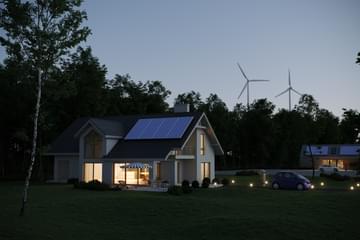
Demand flexibility is a simple idea: use electricity when it’s cheapest, cleanest, and most abundant; ease off when the opposite is true. This doesn’t mean you’re sitting in a dark, unconditioned home. With the right setup, your comfort stays the same. What changes is timing, and usually, you won’t even notice.
The hardware doing this work is stuff a lot of us already own, like smart thermostats, electric heat pumps, home batteries, and EV chargers. With the right controls, these devices shift when they use electricity—charging overnight when demand is low, or midday when solar is flooding the grid, and back off during the 5-to-8 p.m. crunch, when everyone gets home and cranks the AC.
The industry calls this a “non-wires alternative,” which is a very beige way of saying: we handled the demand growth without building new poles, new wires, or a new power plant.
So What’s the Deal with August 17?
Demand Flexibility Day is AESP’s annual awareness push, and this year’s partner list tells you just how mainstream it’s becoming: Southern California Edison, Eversource, Rhode Island Energy, Hydro One, PPL, plus a bunch of program implementers and EV charging platforms.
Program design for these folks is exactly the kind of thing we do at RI, so hit us up if you’re having a demand flex party. I promise we’re fun, even if we start talking about “load shapes” and “artificial peaks.”
Resource planning, program design, and DER and VPP implementation and enablement, is exactly the kind of thing we do at RI, so hit us up if you’re having a demand flex party. I promise we’re fun, even if we start talking about “load shapes” and “artificial peaks.”
- Reviving Legacy Load Flexibility Through Innovative Data-Driven Strategies
- Transforming Puerto Rico’s Grid with Battery Power
- Deploying and scaling flexible load with reliability and speed with RI Shifted DERMS
Why Utilities Care (A Lot, Suddenly)
If you’ve read the last two columns, you know the setup. Demand is climbing for the first time in a generation, driven by data centers and the electrification of everything, while new supply is stuck in interconnection queues. When you can’t build fast, making better use of what exists is a no brainer.
Research led by Tyler Norris at Duke University found that if data centers curtailed just 0.25 to 1% of their annual load, mainly during the most stressed hours, Texas could add up to 15 gigawatts of new data center load in ERCOT without building any new capacity. That’s roughly the demand of the entire city of Houston, unlocked by flexibility alone.
Additionally, ACEEE found that large utility efficiency programs deliver energy at about $21 per MWh, while a new combined-cycle gas plant costs at least twice that. And when AESP surveyed utilities on what’s actually driving their demand flexibility programs, resilience topped the list at 66%, with energy cost savings right behind at 52%.
Utilities aren’t doing this to save the environment. Or at least that’s not the main reason. They’re doing it because the alternative is more expensive and less reliable.
Why You Should Care
Here’s the part I wish more people knew: the savings from flexibility flows to everyone on the system, whether or not you personally participate. The Electrification Coalition tallied it up and found that EVs’ flexible charging load delivered about $3.1 billion in cumulative savings to all ratepayers between 2011 and 2021. All ratepayers. Your neighbor’s EV charging at 2 a.m. is helping hold down your costs, because demand flexibility means we don’t have to build new infrastructure that would show up in our utility bills.
So, there’s a resilience dividend. There’s an equity dividend. And there’s a climate dividend, because shifting use toward midday sun and overnight wind means drawing more of our power from cleaner sources.
And Now, the EV Part
Your EV is the single largest controllable load your home will probably ever have. Cars sit parked about 97% of the time. That’s an enormous window to shift charging around without ever affecting when or how you drive.
Utilities know this, and the programs come in two flavors:
- Passively managed charging uses time-of-use rates to make off-peak power cheaper and lets you respond on your own.
- Actively managed charging goes a step further: you hand the scheduling to the utility or a platform, which adjusts charging in real time based on grid conditions. Regulators approved nine new active programs last year alone, per the North Carolina Clean Energy Technology Center’s tracking.
And people actually do it, because the ask is so small. Consumers Energy in Michigan and North Carolina’s electric cooperatives got over 90% of program participants’ charging shifted off-peak simply by making off-peak power cheaper.
Duke Energy’s program pitch is literally “set it and forget it.” You plug in at 6 p.m., the car charges at midnight, and you never notice the difference.
We can even take this a step further. Managed charging is one-way flexibility: the car listens to the grid. V2G is two-way: the car talks back. Get comfortable on the first rung, and the second one isn’t so far-fetched.
What to Actually do With This
Three things, all easy.
First, check whether your utility offers a Time-of-Use (TOU) rate, a managed charging program, or demand response enrollment for a thermostat or battery you already own. Most people have never looked, and the incentives are often just sitting there.
Second, if you drive an EV and you’re not on a charging schedule, set one tonight. It takes five minutes in the app, and it’s one of the easiest contributions to grid flexibility available to a typical consumer.
Third, keep an eye out on August 17, when a lot of good explainer content will be floating around from the Demand Flexibility Day partners.
The bigger point, and then I’ll let you go: We tend to picture the energy transition as a construction project, and partly it is. But a huge share of the work is intelligence: using the system we already have, and the devices we already own, in smarter ways. That’s something you can personally join this week, for free.
I still owe you the VPP money breakdown (how participants actually get paid, and whether it’s worth your while). It’s coming, I promise. And honestly, this column is good homework for it.
Related Resources
Explore Resource Innovations' clean energy transition insights.